How to Remember Who You Really Are: Signs and a Quiet Practice
Signs that your soul is asking to be remembered, and a simple breathing and silence practice drawn from old contemplative traditions.
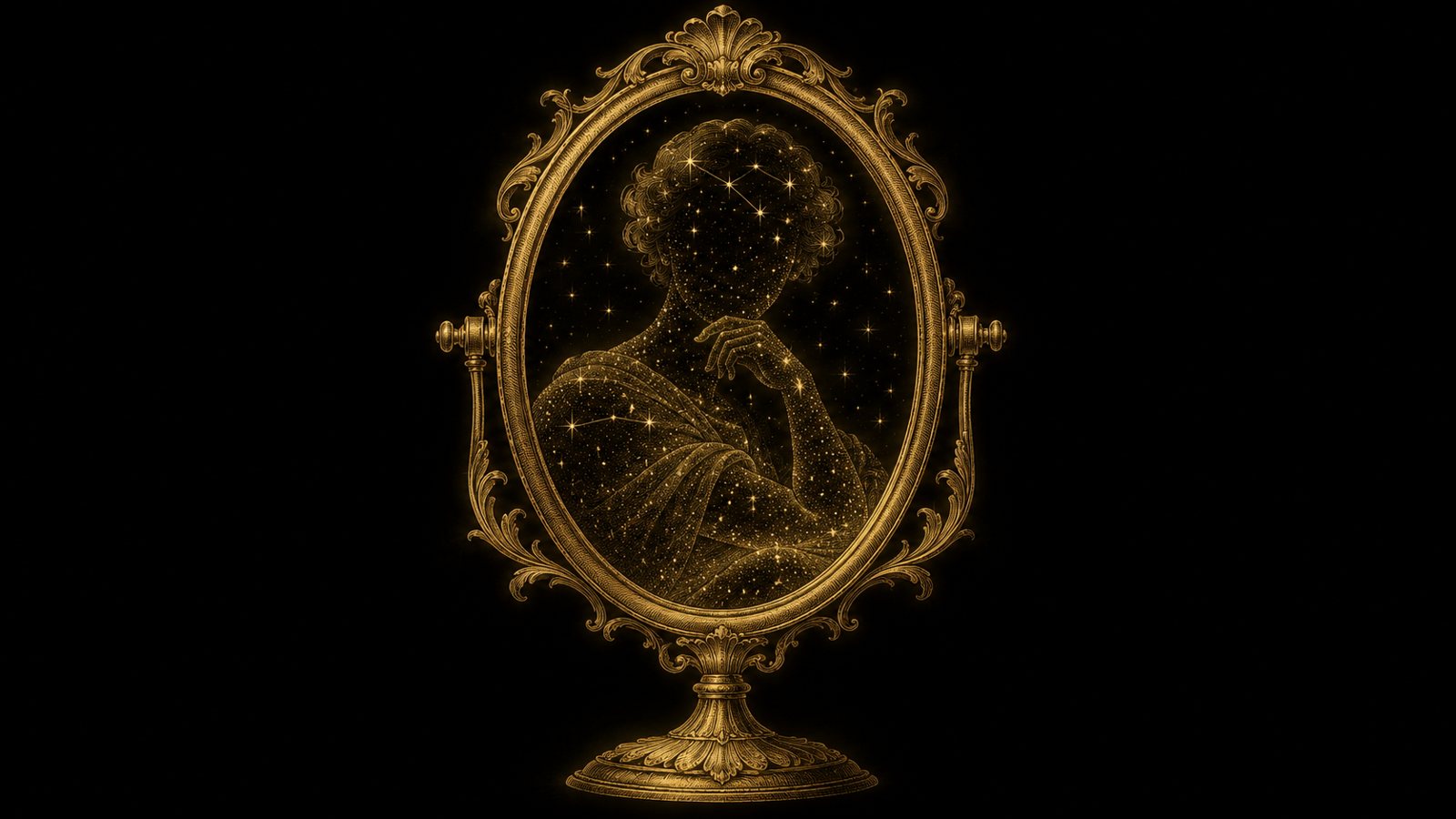
Have you ever had the strange feeling of living someone else's life, as though you were an actor in a role you never chose, following a script someone else wrote? That restlessness in your chest is worth listening to. I think of it as your soul asking, quietly, to be remembered.
In this article I want to share a way of understanding that feeling, some signs people often notice when something inside them begins to wake up, and a simple practice drawn from old contemplative traditions. None of it is a promise or a proof. Take what rings true for you, and set aside what does not.
The forgetting
Many spiritual traditions hold that we arrive in this world with a deep sense of who we are, and that we slowly lose touch with it. Call it spiritual amnesia, if you like. It is not a punishment. It is more like a dust that settles.
Think back to childhood. How many times were you told you were daydreaming too much? How many times did someone say be realistic or that's not how things work? Each of those moments may have seemed small. Together, they can lay veil upon veil over our first, instinctive sense of ourselves, until we begin to doubt our intuition and feel like a grain of sand on an enormous beach.
Modern life can deepen this. We are taught to memorize formulas but rarely taught who we are inside. We are shown endlessly what to buy, wear and think, and seldom taught to hear our own inner voice. We chase goals that may not even be ours, tired by evening, and begin again the next day. Where is the quiet in that routine to ask who you really are?
I will not claim that anyone planned this. But I do believe the forgetting is not permanent. Your inner life is intact. Your gifts are intact. Whatever you call the sacred, your connection to it was never cut. It is waiting, patiently, for a moment to be noticed again. Perhaps that moment is now.
Signs that something is waking up
Your soul, in this view, is rarely silent. It nudges, creates situations, brings certain people near. The trouble is that few of us have learned its language. These are some of the signs people often describe.
Recurring dreams. Not the ordinary dreams that vanish within minutes, but the ones that return night after night and feel more real than waking life. They often happen in places you have never been that feel familiar, with people you do not know but somehow recognize. Traditions interpret them as fragments of other lives, or as glimpses of what you might become. Whatever their origin, they deserve your attention.
Synchronicities. You think of someone and they call. You need an answer and find it in a casual chat. You see the same numbers again and again on clocks, receipts and license plates. Most people call this luck. Others feel there is a quiet intelligence arranging things.
Not quite belonging. Many people describe feeling like a visitor in a country that is not theirs, wearing clothes not cut for them. You look at others, happy with things that seem trivial to you, and wonder how. This need not be arrogance. It can be a sign that you are looking for something broader, a sense of connection and purpose.
Sudden crises of meaning. One day life is normal, and the next you are doubting your work, your relationships, your choices. Our culture often calls this anxiety or depression, and it can be, and it deserves care, including professional help when you need it. But many traditions also see in these moments a call to look at whether your life is truly your own. If you are struggling, please treat that struggle gently and do not face it alone.
What the old traditions did
Across the world, contemplative traditions have described the same basic aim: to return to a truer sense of the self.
In ancient Egypt, texts speak of rites such as the opening of the mouth, which some readers understand as a way of awakening a deeper awareness. In India, the Vedas speak of the atman, the true self beyond the body, and describe practices, which grew into yoga and meditation, for reconnecting with it. In Tibet, the teachings on the bardo explore moving consciously between states of being, and accounts of tulkus speak of remembering past lives. Many native peoples had ceremonies in which a person would symbolically "die" and return with a fresh sense of who they were. And medieval alchemists, many believe, hid in their symbols a description of changing ordinary awareness into something more luminous. In that reading, the philosopher's stone was never an object, but a transformation of the one who sought it.
I should say that how these traditions are read varies a great deal, and scholars would add many shades to this picture. But the common thread is moving, and it points to something simple: you do not need special equipment or years of study to begin. You need sincere intention and the courage to look honestly at yourself.
When you were a child, you may have sensed things you were told were only imagination. The invitation is not to become someone new. It is to wipe the dust from a mirror that was always there.
Numbers, cycles and quiet hours
The video I am drawing on also speaks about the "codes" many people notice in their lives. I present them as ways of looking, rather than as laws.
Repeated numbers are the best known. Some see 11:11 as a pause in which to make an intention. Many read 222 as a call to patience and cooperation, 333 as a call to speak your truth and create, and 444 as a reminder to build solid foundations. Others pay attention to dates and months when important changes tend to fall in their lives, or to names that keep recurring. These are symbolic readings. You can hold them lightly, as a prompt to notice patterns, and decide for yourself whether they mean anything.
The same applies to cycles. Some traditions link inner change to the moon: the new moon as a time to plant intentions, the full moon to give thanks and release, eclipses as moments of reset. Others describe broad phases of life: a first period of learning to be human, a stage of questioning, a stage of deeper awareness, and later years of mastery and guidance. These are general patterns, and every person moves through them differently.
Many mystics also favored the early morning hours, between about three and six, for prayer and meditation. The mind is quiet, the house is still, and fewer things pull at your attention. You do not need to wake at that hour. The point is that stillness helps, whenever you can find it.
A simple practice
Here is the practice the video offers. Think of it as a way of sitting quietly with a single question. If anything in it feels uncomfortable, stop. If you are pregnant, have a health condition or are prone to dizziness, take the breathing very softly or skip it, and be especially gentle if you are going through a hard time.
1. Prepare a quiet space. Choose a place where you will not be interrupted for about thirty minutes, anywhere you feel safe. Switch off your phone and other devices. Sit comfortably, with a long, easy spine, on a chair, a cushion or the edge of your bed.
2. Breathe slowly. Inhale through the nose for a count of four. Hold for seven. Exhale through the mouth for eight. Repeat this cycle twenty-one times, or fewer if it is too much, never forcing. This slow rhythm is widely used for relaxation, and many people find that it settles the mind and softens the senses. Colors may seem brighter or sounds closer. That is normal.
3. Repeat a mantra. The video suggests the syllables Sa Ta Na Ma, repeated silently while your breathing returns to its natural rhythm. Traditionally, they are said to stand for the cycle of existence: beginning, life, transformation and rebirth. Repeat them for about eleven minutes, without watching the clock. If images, memories or emotions come, let them. Don't judge or interpret. Watch them pass, like a film.
4. Ask the question. Then ask, not with your head but with your heart: Who am I, really? Let the question echo. Wait in silence, with no expectations, like an empty cup. An answer may arrive as a word, an image, a bodily feeling, a mood, or just a quiet certainty. Or it may not come at all, and that is fine. Trust the first thing that comes, and do not argue with it.
5. Close gently. You may say aloud: I recognize who I am. I accept who I am. I honor who I am. Move your fingers and toes, stretch, and open your eyes slowly. Then stay for a few minutes in silence before rising. It helps to write down what you noticed.
Afterward, you might feel sleepy, have vivid dreams or feel more sensitive. Be kind to yourself in the days that follow. The video suggests repeating this once a month, around the new moon, at the same hour and place. I would say simply: repeat it as often as it feels helpful, and never as a duty.
What remains
The most important line in the whole practice, I think, is the last one: you do not need the ritual forever. It is a springboard, and once you have learned to jump, you can do it anywhere. The point was never to depend on a technique. It was to remember, in a way that cannot be taken from you, that you are more than the roles, the schedules and the fears you have collected along the way.
So tonight, perhaps, switch off the noise for a few minutes. Sit, breathe, and ask the simplest of questions. Whatever answer comes, or does not, you will have given yourself the one thing a busy life rarely offers: a little time to listen.
Quantum Entanglement, the Subconscious and the Energy You Carry
A calm look at quantum entanglement as a metaphor for how thoughts, emotions and the subconscious may shape the life we experience.
Read →
How to Remember Your Soul Contract and Your Life's Mission
Signs, patterns, gifts and quiet practices that many spiritual traditions say can help you rediscover the purpose your soul chose before birth.
Read →
Edgar Cayce's Prophecy About Dogs and the Awakening of Our Companions
A reflective look at a prophecy attributed to Edgar Cayce about dogs as spiritual companions, and the stories people tell of their pets.
Read →