How Your Soul Chooses Your Parents and Soulmate After This Life
A calm look at what many traditions teach about the life after death: the life review, choosing parents, soulmates, guides, karma and purpose.
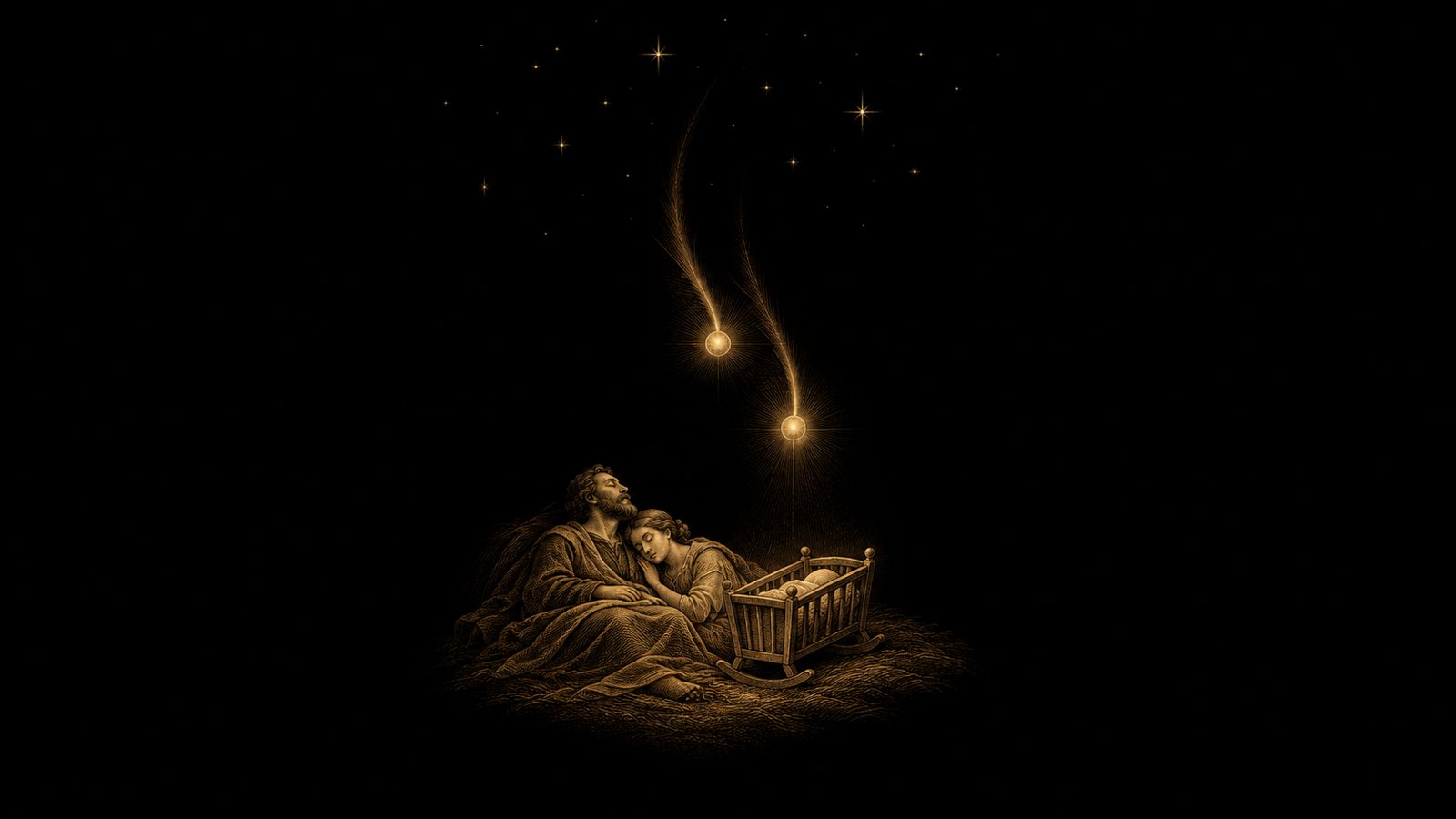
You are not late. You are not lost. You are exactly where you need to be to take the next step.
Let me begin with a small picture. Imagine waking from a dream so real that you mistake it for life, and then realizing that the world you wake into is the one that was the dream. What would you feel if you discovered that death is not an end, but an awakening?
I know the idea can sound strange, even frightening. We were taught to fear the unknown. Yet ancient religions, many philosophers and a great number of near-death accounts seem to lean in the same direction: that consciousness is not put out when the body stops. It is set free. I won't ask you to take that as proven. I only invite you to consider what it would mean for the way you live, grieve and choose.
Death as a comma, not a full stop
Many traditions describe death not as a final point, but as a comma in a story written across many lifetimes. When a soul leaves the physical body, they say, it enters a space of transition, a kind of waiting room where consciousness slowly adjusts to its new reality.
Time, as we know it, does not exist there. Fear and attachment are left behind, though not always at once.
It is also in this early stage, the teaching goes, that fundamental choices appear: looking back over the life just lived, meeting spiritual guides, planning the next steps. Nothing is imposed. The soul decides what it needs in order to keep growing.
The pain of loss softens. Guilt loosens its grip. The fear of death, which so often paralyzes us, gives way to a quiet respect for existence itself.
The life review
Waking up on the other side is described as a time of deep reflection, and not always an easy one. Many souls are said to arrive feeling lost, still tied to old resentments and guilt.
This is why traditions speak of a life review. With the help of mentors, beings of great wisdom and compassion, the soul revisits the life it has just completed. Not to be judged, but to understand: what was lived, what was learned, what could have been done differently.
It is described as watching a film of your own existence, in which you do not only see the impact of each action but feel it, and as freeing, because the soul finally sees its limits and potential clearly.
You do not have to wait for that moment to begin. Ask yourself, gently, today: if I watched the film of my life as it is now, what would I feel? Every word you say, every gesture of love or indifference, every choice made from courage or from fear, is said to echo beyond matter.
Why a soul chooses a hard life
One misunderstanding is common: that the soul plans a perfect existence, free of pain. The teaching points the other way. Growth comes through experience, and the strongest experiences often involve difficulty, forgiveness and unconditional love.
According to this view, the soul chooses its mission based on what it still needs to balance, learn or strengthen. A soul that developed great intelligence but neglected compassion might choose a life that asks it to feel more deeply. Pride may lead to a lesson in humility; fear, to a challenge of courage.
This is not a punishment handed down from outside. It is described as a loving decision that rises from within the soul, supported by its guides, who help it see the possible paths while the final choice stays free.
So when you notice a strong calling, or a challenge that returns like an echo, it may be worth paying attention. These can be clues. Even your deepest fears may carry the seed of your mission. The fear of not being accepted, of failing, of being vulnerable often points to exactly the place where you came to learn to be free.
Your parents, your place, your freedom
Why were you born in this family, with these particular difficulties and affections? Many traditions say that choosing parents is one of the most important decisions a soul makes before returning.
We often judge our families as too imperfect. From the soul's point of view, the teaching says, what matters is not comfort but growth. Some are born into homes full of love in order to learn trust, joy and self-esteem. Others are born into hard or broken families to develop resilience, compassion and self-forgiveness, or to break an old cycle of pain.
The soul is said to weigh its options with its guides, looking at the future parents, their tendencies and the challenges ahead. Some souls even make agreements before birth with others who promise to play a role as father, mother, sibling or grandparent, often people they already knew from other lives.
If you can, try looking at your family as part of your own path. Ask what you needed to learn in exactly this home. Perhaps forgiveness, perhaps acceptance, perhaps the courage to walk a different road. Setting down the role of the victim releases a surprising strength.
The same is said of your country, culture and era: they, too, are described as settings for learning. If you live in a time of conflict, perhaps you are meant to be a small point of peace within it. You are not in the wrong place.
Then comes the natural question. If so much was chosen before birth, do I still have a choice?
The answer given is yes, and fully. The plan is like the sketch of a map. It shows paths, alternatives and possible meetings, but it is not written in stone. You are the one holding the compass. With each conscious choice you realign yourself with your soul's larger direction, and even the decisions that seem to lead you away are said to become material for learning. In this view there is no such thing as being permanently off course.
You can refuse a challenge, delay growth, or take the longer road. So the invitation is to take responsibility rather than wait for destiny. Sometimes that means the courage to leave a harmful relationship, forgive someone, or say yes to a calling of the heart; at other times, patience. Free will is not a burden. It is the gift that gives each act of love its weight.
Soulmates and spiritual contracts
Some meetings carry a feeling you can almost sense on your skin. Time seems to pause, as though everything whispers, "Pay attention." Traditions describe these as reunions between souls who agreed, before birth, to meet again.
Recognition is said to happen through energy rather than the eyes: a pull you cannot explain, sometimes deep peace, sometimes a whirlwind. A conversation that feels as if it is resuming from where it left off.
But recognition does not promise ease. Often these bonds bring intense challenges, precisely because they touch what needs to be healed. Not every intense connection is a soul reunion, and not every soulmate comes to stay. A helpful question: does this person help me become who I truly am, even when it hurts? Open your heart, but keep your awareness. Sometimes loving deeply means walking together, and sometimes knowing when to let go.
The teaching also separates several kinds of bonds. Soulmates are described as two sparks from the same flame, who meet across lifetimes to help each other evolve, as lovers, friends or partners. They do not come to rescue you, but to awaken who you already are. Soul companions walk with you through particular chapters, with gentler lessons of trust, loyalty and patience. And spiritual contracts are agreements between souls: I help you with self-esteem, you help me with forgiveness. Some are joyful; others involve loss or betrayal, and are still said to serve a higher purpose. Perhaps there is no need to search desperately for one perfect soulmate. Each person who crosses your path may carry a gift, even when it arrives wrapped in difficulty.
Guides, karma and great challenges
You are never alone, these traditions say. From the moment your soul decided to return, a team of loving, wiser consciousnesses was assigned to accompany you. They do not control your choices. They respect your freedom, and they offer signs: a sudden intuition, a song at just the right moment, a sentence that leaps off a page, a vivid dream that leaves you in peace, a person who appears at the right time. Silence, nature and simple gratitude are said to make you more receptive.
Karma, too, is often misunderstood as cosmic punishment. In the gentler reading, it is simply cause and effect: every thought, word and action sends out energy that returns as an opportunity for balance and learning. Someone who abused power might learn humility; someone who caused pain might learn empathy. It is not a rigid sentence, because you can create kinder patterns at any moment. When a difficulty arrives, you might replace "Why is this happening to me?" with "What can I learn from this?" That one change moves you from victim to co-creator.
What of extreme suffering, such as severe illness, poverty or war? When someone is in the middle of it, the feeling that it is unfair deserves tenderness, not argument. Some traditions add a quieter thought: that certain souls choose very hard lives, to grow quickly or to serve others, teaching acceptance, compassion or a longing for peace. If so, those who walk the hardest paths are not victims, but spiritual warriors, and we may meet their stories, and our own, with more respect and less quick judgment.
Remembering your purpose
You did not come only to survive. In this view, your purpose is not something to invent. It is already written in the essence of your soul, and finding it is a matter of remembering.
Some signs may help. Synchronicities tend to multiply as you draw near: the right people appear and ideas arrive like sudden light. Some traditions speak of the Akashic records, a library of the soul holding every experience of every life. Almost all of them recommend silence, since when the mind is loud the voice of the soul is hard to hear. Even five quiet minutes a day can help. Your soul has left traces in your passions, your old dreams, your deepest pains and the talents that keep shining.
So look at your life, with its beauty, its pain and its ups and downs. It does not matter if the road was harder than you imagined, or if you stumbled and started over a thousand times. Each step, each tear and each smile may have been needed to bring you to this moment of awareness. The mind loves to say you are late. The soul knows that everything blooms in its own time, with no unforgivable mistakes, only detours and endless chances to begin again.
Trust the path, even when you cannot see the next step. Accept your past as raw material and let it go with gratitude. Honor today as a gift. If doubt comes, remember that your soul already knows the way. You only have to trust it, and take one step.
Quantum Entanglement, the Subconscious and the Energy You Carry
A calm look at quantum entanglement as a metaphor for how thoughts, emotions and the subconscious may shape the life we experience.
Read →
How to Remember Your Soul Contract and Your Life's Mission
Signs, patterns, gifts and quiet practices that many spiritual traditions say can help you rediscover the purpose your soul chose before birth.
Read →
Edgar Cayce's Prophecy About Dogs and the Awakening of Our Companions
A reflective look at a prophecy attributed to Edgar Cayce about dogs as spiritual companions, and the stories people tell of their pets.
Read →