When Someone Appears in Your Dreams: What Your Soul May Be Saying
A gentle guide to the people who visit your dreams, from loved ones who have passed to old flames, and how to listen to what they may be telling you.

Have you ever woken in the middle of the night with your heart racing, the face of someone still vivid in your mind, and wondered: why that person, and why now? I know the feeling well. It is the sense that the dream was not only a dream, that something real happened in a place we do not usually visit.
Many spiritual traditions would say that nobody appears in your sleep by accident. This is not a claim I can prove, and I will not pretend to. But I have found it a kind and useful way to look at the people who come to us at night. So let me share it with you, the way I have come to understand it.
The language of the soul
When you are awake, you speak English, or Portuguese, or Spanish. Your inner life, many traditions say, speaks in images, feelings and encounters. And it speaks through people for a simple reason: we are relational beings. Most of what we learn, we learn through others.
Your mind holds so many faces. Yet in dreams, the same few people tend to return, or someone you have not seen in years, or someone you only just met who stirs something you cannot explain. From this point of view, those figures are not random. They act as symbols and messengers, carrying something you are ready to look at.
So if you woke this morning remembering someone, pause. Breathe. Ask: what is this presence showing me? What part of me might this person stand for? What is the message in this meeting? The answers do not always come at once. But the questions open a door.
The invisible threads between us
Spiritual teachers often speak of cords of energy: threads that form between people whenever there is a strong bond, whether of love, anger, gratitude or resentment. The stronger the feeling, the stronger the thread. And the idea is that these threads do not simply vanish when you stop seeing someone.
That could be why someone from ten years ago still shows up in your sleep. The thread, in this view, is still there, and during the night, when the busy mind quiets, it becomes a path along which something can travel. Have you ever thought of a person and had them call a few minutes later? Many describe this as a vibration moving along such a thread.
Behind this sits a deeper belief held in many traditions: that before birth, souls agree to play roles in one another's lives. Your parents, a love that broke your heart, a friend who let you down, all took part in a kind of pact to help you learn something. In dreams, this tradition says, you meet them again where the work is still unfinished, where there is forgiveness to give or love to express, or simply a sign that the lesson is done and you may move on.
There is also something practical in this. The feelings you carry toward a person shape the kind of thread that connects you. If you spend your days feeding anger, that thread may keep pulling that person into your nights. If you practice forgiveness and gratitude, the thread changes. It stops being a prison and becomes a bridge. You are not a victim of your dreams. In some real way, you take part in making them.
When a living person reaches you
Picture this. It is three in the morning and you wake from a dream where someone looked you in the eye and told you something important. You pick up your phone and find messages from them, sent only minutes ago. Is it coincidence? The traditions would say it is one of the most common ways that living people reach one another.
In this view, there are three kinds of dreams of the living:
- The person needs you. An unspoken cry for help, or a loneliness they cannot name. You sense it before your mind does.
- The person is thinking of you. They miss you, or want to settle something. You wake with a weight in your chest and a quiet certainty that you ought to talk.
- The person has something unsaid. An apology, a confession, a bit of love they never found the courage to speak. In dreams, without pride in the way, the truth sometimes comes out more gently.
How can you tell a real message from the mind simply sorting its memories? Pay attention to the feeling. Ordinary dreams fade quickly. A dream that matters tends to stay with you, with a certain urgency, and their name may follow you all day. If you wake thinking of someone for no clear reason, it costs nothing to send a kind message and ask how they are. Often the answer is yes, there was something going on, and both of you feel relief.
A word of care, though. Not every dream about someone calls for action. If you wake in peace, with a sense of closure, the message was probably for you alone, and the right response is gratitude. If you wake restless, with unanswered questions and a strong impulse to reach out, then perhaps it is time to extend a hand. And if the person in your dream is someone who hurt you, you are free to choose how to respond. Forgiving does not mean reconnecting. It means releasing the weight so that both of you can go on.
Visits from those who have passed
Some dreams you never forget. A person who has died appears so clearly that you feel the hug and hear the laugh. You wake with tears and a certainty: that was not an ordinary dream.
Many traditions describe such experiences as true visitations, and they offer signs that set them apart from a dream of memory:
- Clarity. An ordinary dream is confused and jumbled. A visitation is simple and clear. The person appears as they were, or younger and well, and nothing is chaotic.
- Peace on waking. Even if you wept in the dream, you wake with a deep calm, a feeling that they are all right.
- A specific message. Something you could not have known, or comfort about a trouble you had told no one. People tell of relatives who pointed to where lost papers were, or who warned of a health problem before it was found.
- The quality of the dream. The light is different, the colors very vivid or strangely soft, and the dominant feeling is love.
Why love? On the far side of the veil, these traditions say, pride, grudges and resentment fall away. What remains is the essence of the person. This is why even a difficult parent may come in dreams to ask forgiveness, and why a friend who died young may come to say that they are at peace.
Not everyone visits right away. Souls, we are told, have their own journey after death, and some also wait respectfully while you grieve. If you are hoping for a visit and it has not come, that does not mean they do not care. Spiritual timing is not our timing. You can make a quiet space before sleep: say a simple prayer, light a candle, and invite them with love, not with demands. Then let it go. And if a visit comes, write it down at once, because these dreams slip away faster than any other.
When the person is a mirror
Here is a thought that can change how you read your dreams. Often, the people who appear do not stand for themselves. They stand for you.
When your ex appears, it may not be about them at all. They may represent the version of you who lived through that time, with its hopes and fears. Your soul may be revisiting a lesson, or healing a wound that runs deeper than that relationship. Sometimes an ex appears just as you are about to repeat an old pattern, as if to say: you have been here before. And sometimes they appear calm and peaceful, like a quiet graduation, a sign that the lesson has been learned. Dreaming of them does not mean you still love them or need to call them.
The envious friend who undermines you may be your own envy, still unfaced. The controlling mother may be your fear of losing control. Jung called such hidden parts of ourselves the shadow. If a dream leaves you angry, ashamed or deeply uncomfortable, it may be touching one of these. And when someone appears showing courage, creativity or compassion, they may be reflecting something in you that is still waiting to be claimed.
Dreams that look ahead
Some people dream of someone and soon learn something true about them: a pregnancy, a move, an illness. Traditions that speak of time as less rigid than we assume say that the soul, freed from the body's limits during sleep, can sense what is still forming, the way you can see clouds gathering before rain.
Such dreams tend to be of three kinds: a personal warning, an announcement of change, and, more rarely, a dream about a public figure that seems to touch many lives. But the most important point is this: a warning is not a sentence. The future, in this view, is not fixed. A dream of danger around someone you love is an invitation to be careful, to call them, to send them good wishes. The message exists so that something can change.
A morning practice
If you want to honor these dreams, here is a simple way that has helped me.
First, write it down before anything else. The details dissolve within minutes of waking. Keep a notebook by your bed. I have done so for years, and I have learned that the dreams I did not write down were often the ones that mattered most.
Second, feel it. Close your eyes again and return to the feeling, not the plot. Where does your body hold it: tight chest, soft shoulders, a knot in the stomach? The body often knows what the mind hides.
Third, ask gently. Why this person, why now? What do they stand for in me? What was the main emotion? Is there something I am being asked to do? Do not force the answers. Let the questions float through the day, and see what comes in a quiet moment.
A closing thought
Tonight, before you sleep, you might set a small intention: I am open to what my soul wishes to show me, and I will remember. Put a notebook and pen beside the bed, and trust a little.
Whether you take the people in your dreams as messengers, as mirrors, or as the mind's own poetry, they all invite the same thing: to look at your relationships with more honesty and more tenderness. And that is a good way to begin any morning.
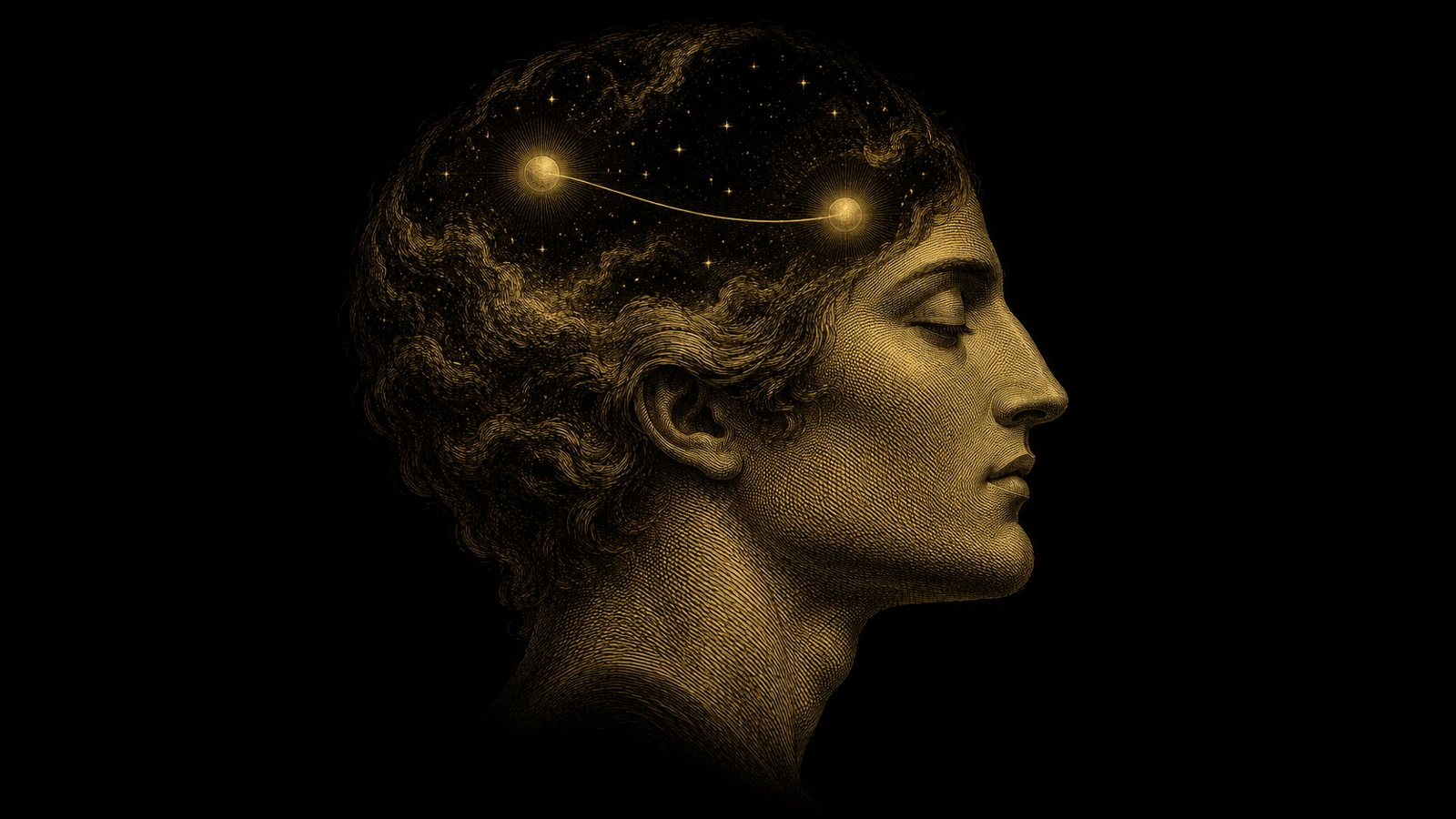
Quantum Entanglement, the Subconscious and the Energy You Carry
A calm look at quantum entanglement as a metaphor for how thoughts, emotions and the subconscious may shape the life we experience.
Read →
How to Remember Your Soul Contract and Your Life's Mission
Signs, patterns, gifts and quiet practices that many spiritual traditions say can help you rediscover the purpose your soul chose before birth.
Read →
Edgar Cayce's Prophecy About Dogs and the Awakening of Our Companions
A reflective look at a prophecy attributed to Edgar Cayce about dogs as spiritual companions, and the stories people tell of their pets.
Read →